
The colour of good honey
- Posted on 07/12/2023 10:05
- Film
- By abelozih@sante-education.tg
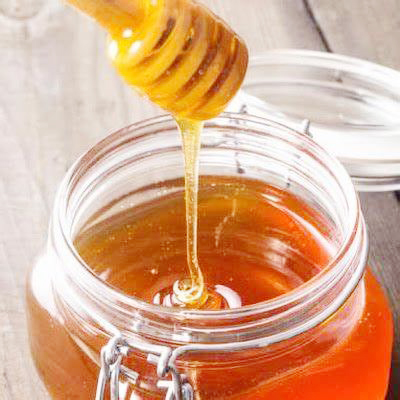
Extract from the article: Red, white, straw yellow, ochre, brown or even black... honey comes in different colours. How do you explain this? It's simple: each flower foraged by a bee leaves its own identity card in the honey it produces: its taste, its aromas and its colour.
Red,
white, straw yellow, ochre, brown or even black... honey comes in different
colours. How do you explain this? It's simple: each flower foraged by a bee
leaves its own identity card in the honey it produces: its taste, its aromas
and its colour. So if the nectar or honeydew has no pigment, the liquid honeys
produced will be colourless and turn white once crystallised. If, on the other
hand, the nectar is coloured, the honey will borrow its pigments. Pollen grains
and their pigments also play a direct role in the colour of honey. The colour
of honey therefore varies according to geographical location, climate and the
flowers foraged. Over time, the crystallisation of honey can also change its
colour. This is a natural process that modifies the texture of honey while
preserving its properties. For example, a honey that is initially creamy may
take on opalescent hues, changing its original colour.
There
are two (2) main families of honey: monofloral and polyfloral. Single-flower
honeys are made from a single variety of flower.The taste, aroma and colour of
monofloral honeys vary according to the area of origin and the type of flower
harvested.The best-known single-flower honeys include acacia, sunflower and
cashew.On the other hand, there are honeys made from different types of
flowers: these are polyfloral honeys.The colour of these honeys depends on the
flowers used to make them.These honeys come in a wide range of colours: forest
honeys.
The
influence of melliferous sources
The
flowers foraged by bees play a key role in the colour of honeys.Each floral
source contributes to the specific colour of the honey.The natural pigments
present in the nectar of the flowers mix with the enzyme produced by the bees
to create a palette of colours. Flowers such as acacia give honey a pale yellow
colour. Honey from sunflowers or dandelions will be a deep yellow, while that
from heather flowers will be brown and that from cashew trees white. Forest
honey is red, brown or black.
The
role of sugar
Sugar
also influences the colour of honey.Sugar is made from nectar, the main source
of pollen.Nectar contains between 20% and 80% sugars (glucose, fructose or
sucrose).The sugar composition of nectar influences the speed at which honey
crystallises, which in turn influences its colour!Similarly, variations in
certain elements present in honey, such as pollen grains and their pigments,
play a direct role in colour.
The
colours of honey in Togo
The
honeys produced in Togo come in a variety of colours and flavours, thanks to
the country's floral diversity.Bees gather nectar from different flowers, which
influences the colour, flavour and properties of the honey.Here are some of the
types of honey we find, although availability may vary according to region and
season:
Acacia
honey: Acacia honey is often characterised by its light colour, ranging from
pale golden to almost colourless.It has a delicate, sweet flavour with floral
notes.
Forest
honey: Togo has many forests. Honey from these forests is dark in colour,
ranging from russet to light brown or from dark brown to black.This honey can
have robust and complex notes, reflecting the diversity of plants in the
forest.
Shea
honey: Bees sometimes gather nectar from shea flowers, producing a honey that
can have a darker reddish hue and rich, earthy flavours.
Sunflower
honey: Togo's sunflower fields can produce honey with golden hues.It generally
has a sweet, slightly fruity flavour.White cashew field honey.
Which
honey to choose?
All
types of honey have beneficial effects on health.However, it is recommended
that you choose forest honey, which is often considered to be naturally rich in
nutrients.The bees that produce forest honey gather a variety of flowers from
forest vegetation. This floral diversity gives the honey a wider range of
nutrients, minerals and bioactive compounds.Also, red honeys, such as forest
honey, tend to have higher levels of antioxidant compounds. These antioxidants
can help neutralise free radicals in the body, helping to protect cells from
oxidative damage.Finally, forest honey is often appreciated for its complex
flavours, antimicrobial and anti-inflammatory effects and even benefits for the
immune system.Notes from different floral sources give this honey a range of
flavours, from woody to slightly herbaceous.Several cooperatives produce forest
honey in Togo. In the central region, three cooperatives stand out and were
recently awarded prizes in the best honey competition.These are the DOOLE,
DEPOND-MON and HASSANA GAFOLE beekeeping cooperatives.
Elom
AKAKPO
To
contact these beekeeping cooperatives, please contact :
SCOOPS
DOOLE: + 228 90 34 44 67
SCOOPS
DEPOND-MON: +228 91 75 15 54
SCOOPS
HASSANA GAFOLE: +228 92 69 30 08