
Blood donation in Togo: overcoming reluctance to save lives
- Posted on 01/08/2024 11:07
- Film
- By abelozih@sante-education.tg
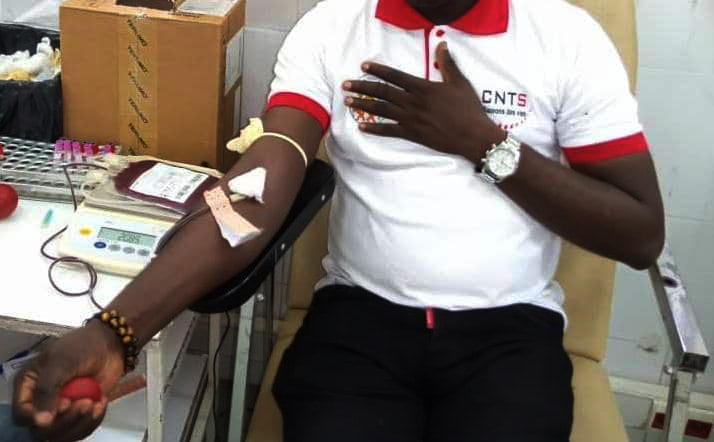
Extract from the article: Donating blood is a vital act that saves millions of lives every year. However, despite awareness campaigns, reluctance to donate blood remains a major obstacle. What are the factors behind this reluctance, along with strategies and motivational mess
Donating blood is a vital act that saves
millions of lives every year. However, despite awareness campaigns, reluctance
to donate blood remains a major obstacle. What are the factors behind this
reluctance, along with strategies and motivational messages to encourage blood
donation?
Reluctance to donate blood occurs when people who have
been made aware of the importance of giving blood are reluctant to do so. This
reluctance is often linked to unexpressed fears, preconceived ideas and
personal convictions that militate against blood donation.
Factors contributing to reluctance
The main factors contributing to reluctance include
preconceived ideas and fears.
Weakening and illness:
Many people think that giving blood will weaken them or make them ill.
Sacredness of blood:
For some, blood is sacred and should not be donated because of religious or
cultural beliefs.
Risk of contracting a disease:
The fear of contracting a disease through blood donation is common.
Pain of the needle:
Fear of the pain caused by the needle discourages many potential donors.
Sale of blood:
The perception that blood donated free of charge is sold creates mistrust.
Specific features that accentuate reluctance in Togo
There are no specific factors in Togo that make people
reluctant to donate blood.The same ideas and fears are generally found
everywhere, albeit to varying degrees.
Qualities of blood transfusion staff
Blood donation is governed by strict ethical principles,
both for donors and for transfusion centre staff.
Voluntary: Blood donation must
be a voluntary act, without pressure of any kind.
Voluntary: Donors must not
receive any payment for their blood. Anonymity: The donor and recipient
must not know each other's identity.
No profit : Blood must not be
sold; it is provided in exchange for a small contribution to cover production
costs.The staff of blood transfusion centres must demonstrate professionalism
in welcoming donors, in carrying out the various tasks during a donor's stay in
the establishment, and in managing any conflicts a donor may have with them, so
that donors have an unforgettable experience during their stay, which will
encourage them to donate regularly.The distribution of blood products should
not be a CNTS activity, as is currently the case in Togo, where patients'
prescriptions are brought directly to the CNTS by their parents to be dispensed.
This situation leads to long queues that turn into
crowds in front of the CNTS counters. Conflicts frequently arise between blood
product applicants and also between them and the distribution staff. The staff
try to manage these conflicts as best they can, but if distribution were
carried out according to the rules by sending blood products to hospital blood
banks so that they in turn could deliver them directly to hospital patients,
there would be no queues at the CNTS or in hospitals.
Strategies to combat reluctance
Communication is the key to removing obstacles to blood
donation.If blood is life, it is noble to give it to save lives.There is no
risk of weakening or falling ill yourself because a medical examination will
precede your blood donation, and during this examination your ability to give
blood without weakening will be assessed.You will not be tested if a risk to
your own health is detected.
If blood is sacred, this is a good reason to give what
is sacred (blood) to save what is sacred (life). All religious currents
advocate solidarity, mutual aid and empathy, which are equally sacred values.
If these beliefs are interpreted correctly, we will realise that they support
the idea of donating blood.
Donating blood does not expose you to the risk of
contracting a disease because single-use equipment is used.
As for the fear of pain from the needle, the
professionalism of the staff will minimise the pain. During the entire blood
donation process, it is only when the needle passes through the skin and the
vein wall that you will feel a one-second pain. The rest of the process is
completely painless. As for the sale of blood, blood cannot be considered as
sold because the CNTS does not make a profit on blood, it works rather at a
loss. The cost of producing a bag of blood is 10 times the price at which
patients receive blood, because the state subsidises transfusion activities.The
patients' contribution is intended to support the state subsidy for the
continued production of blood.
Blood donation motivational messages
When it comes to blood transfusion, the norm is for each
country to be self-sufficient, i.e. to succeed in mobilising a sufficient
number of blood donors in the country to produce all the blood products needed
for the care of the country's patients expressed in the form of requests for
blood products.It is not recommended to import blood products from another
country.A country needs to mobilise 1% of its population to donate blood, which
means collecting at least 80,000 blood donations a year for Togo. We have
65,000 bags a year, so we still need to mobilise 15,000 blood donors in
addition to those who already give.
Blood is a natural, living medicine found only in the
human body.It has a short shelf life (less than a month), which is why blood
collections need to be regular. Every day, 250 bags need to be collected across
the country, including 150 bags in Lomé.
Community involvement
Togolese communities in all localities are invited to
get involved in the blood drives organised near their homes and at the fixed
blood collection points.The one in Lomé is the Centre National de Transfusion
Sanguine (CNTS) in Tokoin Doumasséssé, not far from the Ecole Primaire Publique
Doumasséssé 2 and the EAMAU.It is open on working days from 7.30am to 6pm and
on Saturdays from 8am to 2pm.
Raymond DZAKPATA
Article validated by Prof. Lochina Feteke, Director of
the CNTS