

Life assistant: facilitating the daily life of vulnerable people
- Posted on 11/05/2023 18:32
- Film
- By abelozih@sante-education.tg
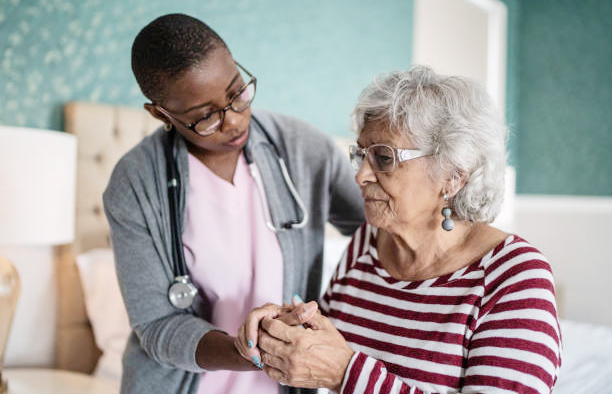
Extract from the article: Older people may need care at home when they are frail or weak, especially after discharge from hospital or rehabilitation facilities. Simple care is usually provided by family members or friends. For more complex care, Rosalie Benthywa Johnson, Dire
Older
people may need care at home when they are frail or weak, especially after
discharge from hospital or rehabilitation facilities. Simple care is usually
provided by family members or friends. For more complex care, Rosalie Benthywa
Johnson, Director of Personal Assistance Service at Home and in hospitals of
the NGO VISA (SADH-VISA), stresses the need for a professional, in particular a
home and hospital care assistant or life assistant, to ensure the well-being
and safety of these frail people.
At
present, this profession, life assistant, can be exercised by both men and
women. The job of home and hospital care assistant or life assistant consists
of accompanying and helping people in their daily lives, providing them with
physical and moral assistance. « It is a person who has been trained to
provide assistance to people who need it, such as the elderly, the handicapped
and dependent people who can no longer manage on their own. This is due to
their loss of autonomy », said Rosalie Benthywa Johnson, Director of
the Home and Hospital Care Service of the NGO International Volunteers for
Health Promotion in Africa (VISA).
What
are the tasks of the life assistant?
The
life assistant provides material, moral, social or health care services to
enable the independent elderly person or the person in need to remain at home.
The life assistant is at the service of elderly people in a situation of loss
of autonomy and dependence which can, sometimes, be significant. The tasks
entrusted to them are many and varied. « Their role is to take care of
the administrative paperwork (bills, files), manage food shopping, buy
medicines at the pharmacy, and maintain the home. He/she also has the duty to
prepare meals, taking into account the rules of healthy eating and the
constraints that may exist depending on the person, to accompany the person in
his/her movements and in all daily activities and in social activities. The
life assistant's social role is to break the isolation in which the person may
find him or herself », stressed the director of SADH-VISA.
Life
assistants can determine whether people are receiving the services they need
and recommend additional services if necessary. They can also help with travel
arrangements to medical appointments.
Difficulties
encountered
In
carrying out her duties, the carer encounters difficulties. « It is a
difficult job when the working conditions are not favourable or if the family
is demanding and stressful. It requires time to think about certain cases such
as Alzheimer's. You have to be physically fit and have a good sense of
humour. You have to be physically and
mentally fit. Adopting good gestures for those who have lost their mobility,
for example, you have to carry them to wash, get up, lie down and get dressed »,
says Rosalie Benthywa Johnson.
How
to become a life assistant?
« To
become a life assistant, you have to train as a personal assistant or life
assistant. You also need to have qualities such as being dynamic and
responsive, being autonomous in your work, being physically fit and knowing how
to adapt. You also need to be a good listener and have good interpersonal
skills to create links with the people you care for », advised
Rosalie Benthywa Johnson, Director of the Home and Hospital Care Service of the
NGO VISA.
Very
often, the life assistant works in the home of the individual. However,
sometimes they are employed in a collective structure in a private space. This
type of structure has recently developed and is regularly looking for
professionals. The life assistant can also be employed by communal social
action centres.
Raymond
DZAKPATA