
« Agbissan » to prevent blood clots
- Posted on 11/12/2023 14:02
- Film
- By abelozih@sante-education.tg
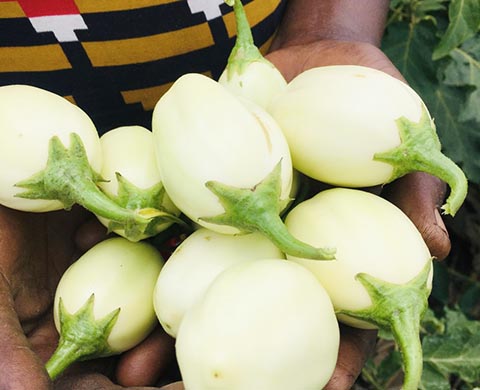
Extract from the article: Few vegetables come in such a wide variety of shapes, sizes and colours. There are round, oval and banana-shaped aubergines. Their skin can be purple, green, reddish or even white. Only one characteristic is common to all varieties of aubergine: the
Few vegetables come in such a wide variety
of shapes, sizes and colours. There are round, oval and banana-shaped
aubergines. Their skin can be purple, green, reddish or even white. Only one
characteristic is common to all varieties of aubergine: the whitish colour of
their flesh and seeds. Aubergines can improve blood circulation, prevent blood
clots and boost immunity.
Low in calories, African aubergines are a
real concentrate of antioxidants, fibre and micronutrients. Rich in water (93%)
and low in sugars (2.5%), it contains all the B group vitamins, with the
exception of B12. After cooking and heat loss, an average aubergine provides
10-15% of the recommended intake of vitamins B1, B3 (or PP), B5, B6 and B9.
Aubergines have the function of promoting
the synthesis of proteins, lipids and nucleic acid, which can increase oxygen
supply capacity, improve blood circulation, prevent the formation of blood
clots and increase the body's immunity.
Preventing blood clots
Blood clots, or thrombi, can cause serious
health problems such as strokes, heart attacks and pulmonary
embolisms.Incorporating 'Agbissan' into the daily diet can help reduce the risk
of these potentially fatal complications.
Studies conducted by researchers from
several renowned institutes have revealed the protective properties of wild
aubergine against stroke.Research published in the « Journal of
Neurology and Stroke » showed that extracts of this plant contain
bioactive compounds, such as glycoalkaloids and flavonoids, which have
beneficial effects on cardiovascular health.The glycoalkaloids found in
aubergine have been shown to have anti-inflammatory and anticoagulant
properties, helping to reduce the risk of blood clots causing ischaemic
strokes. The flavonoids present in this plant have also demonstrated
neuroprotective properties, protecting the brain's nerve cells against
oxidative damage, thereby reducing the risk of haemorrhagic strokes.
Another study by phytochemistry researchers
has identified specific bioactive compounds in wild aubergines, notably
flavonoids, which may play a crucial role in protecting blood vessels and
preventing blood clots, thereby reducing the risk of ischaemic stroke.
Aubergine salad recipe: Take 10 fresh
aubergines, 4 tomatoes, 2 cucumbers, 3 onions, 2 tablespoons olive oil, juice
of 1 ripe lemon, salt and pepper. Cut
the aubergine into thin slices and lightly fry in a pan. Cut the tomatoes,
cucumbers and red onions into small pieces. Mix all the vegetables together in a
salad bowl. Add olive oil, lemon juice, salt and pepper to taste. Serve chilled
with a main course.
Raymond DZAKPATA