
Blood donation conditions: What you need to know
- Posted on 21/09/2024 11:57
- Film
- By abelozih@sante-education.tg
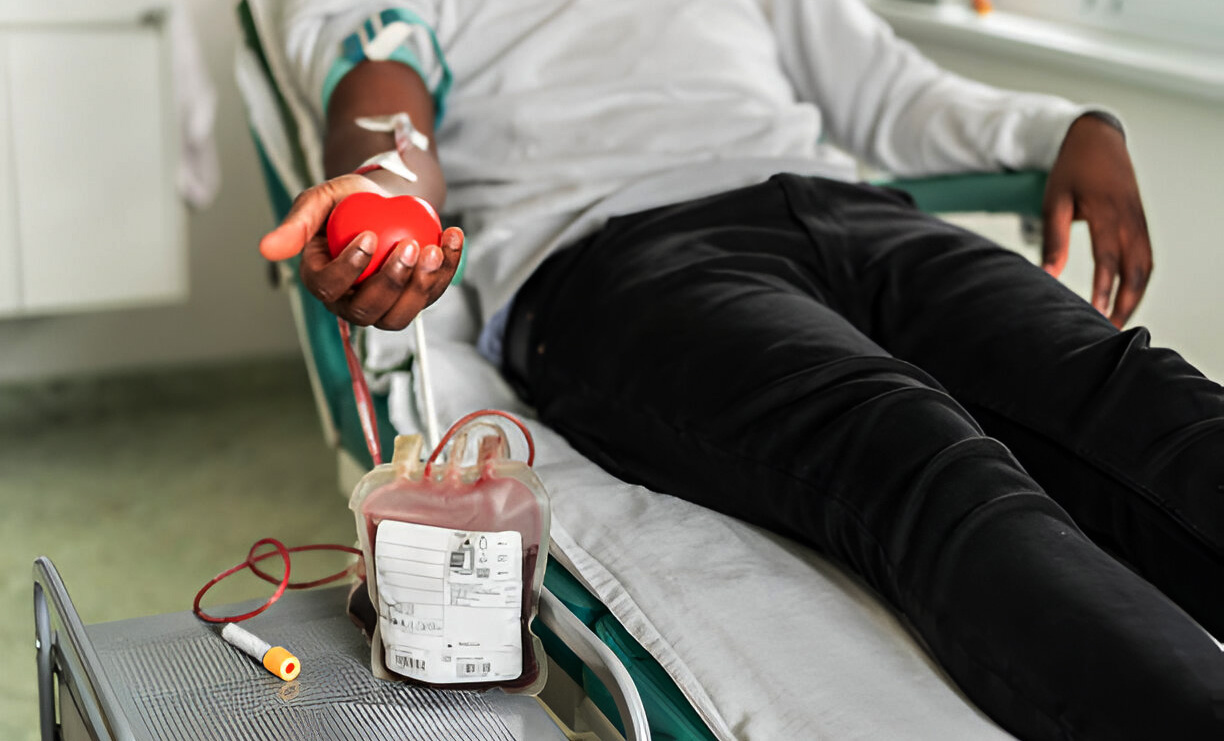
Extract from the article: Donating blood is much more than a simple gesture. It's a vital act of solidarity that plays an indispensable role in saving human lives. Every day, patients around the world depend on the generosity of donors to obtain the blood they need for life-s
Donating blood is much more than a simple gesture. It's a vital act of solidarity that plays an indispensable role in saving human lives. Every day, patients around the world depend on the generosity of donors to obtain the blood they need for life-saving transfusions, whether to treat serious illnesses, traumatic injuries or surgical procedures. To ensure that this donation is as safe and effective as possible, it is essential to respect certain conditions and follow precise steps.
The
blood donation process is designed to protect both donor and recipient. This
involves checking the donor's state of health, ensuring that the donation is
carried out under optimum conditions, and making sure that the blood donated is
of high quality and safe.
General
conditions for donating blood
Age:
In general, donors must be between 18 and 60 years of age. However, in some
regions, 16-year-olds may also be asked to donate blood with parental consent.
This flexibility, which stems from demographic structure, encourages the
participation of young people while guaranteeing their safety. This is also the
case for people over 60 up to the age of 65 or 70.
Weight:
The minimum weight required to donate blood is generally 50 kg. This threshold
is essential to avoid the risk of discomfort or post-donation side effects, as
a proportionally higher volume of blood collected may affect people of lower
weight. Compliance with this requirement ensures safe collection and minimizes
risks to the donor.
General
state of health: Donors must be in apparent good health
at the time of donation. If symptoms of contagious diseases are present, such
as fever, cough or other signs of infection, it is preferable to postpone
donation. This precaution prevents the transmission of disease and ensures the
safety of the recipient. Being in good health guarantees rapid recovery after
donation.
Chronic illnesses: Certain conditions such as diabetes, high blood pressure, heart disease, asthma, sickle cell anemia and other hemoglobin disorders can affect the ability to donate blood. People suffering from these diseases, or undergoing medical treatment for other chronic conditions, who wish to donate blood, should consult their doctor before coming forward for a donation. The doctor will assess whether donation is compatible with your current state of health. You should report your state of health to the pre-donation consultation at the transfusion center, where your suitability to donate blood will be determined.
Alcohol
consumption: Alcohol consumption should be avoided
for at least 24 hours prior to blood donation. Alcohol can affect blood quality
and dehydrate the body, increasing the risk of discomfort or complications
during and after donation.Avoiding alcohol helps to ensure that the body is in
the best possible condition for donation.
Travel:
Recent travel to areas where certain diseases are endemic may influence
eligibility to donate blood.Some regions present increased risks of blood-borne
diseases. In general, a certain delay (one month or more) is required after a
trip to these areas before you can donate blood.This waiting period ensures
that you are not carrying any diseases that could be transmitted to
recipients.Sexual risks: unprotected sexual intercourse with an occasional
partner in the last three (03) months is a strict contraindication to blood
donation. The risk of infectious transfusion is far too high for recipients of
labile blood products.
Pre-donation
preparation
Drink
water: It is advisable to drink a sufficient
quantity of water (at least 0.5l or 500cc) before donating blood.Good hydration
helps to thin the blood. This facilitates blood collection and reduces the risk
of discomfort during and after donation.
Avoid
fatty meals: Eat a balanced meal before donating
blood, but avoid high-fat foods.Fatty meals can alter blood quality and make
tests less reliable. Prefer meals containing lean proteins, vegetables and
fruit for optimal preparation.
Adequate
rest: Make sure you get a good night's sleep
before the day of your donation.Adequate rest contributes to your general
well-being and ensures that you are in good physical condition for the
donation.Fatigue increases the risk of post-donation discomfort or side
effects.
Donation
process
Welcome
and registration :Donors are welcomed upon
presentation of photo identification (CNI, passport, health insurance card,
driver's license).They receive an informed consent form for blood donation,
which they read, sign and confirm that they are of the required age and have fully
understood the ethical principles of blood donation, as well as the importance
of blood products for patient care.Questionnaire: Before donating blood, a
medical questionnaire must be completed. This form is designed to assess
eligibility for donation based on health status, medical history and lifestyle
habits. The questionnaire helps to identify any potential risk factors and
ensure that the donation is made safely.
Medical
examination: A healthcare professional will perform
a medical examination. He or she will measure weight, blood pressure, check
pulse, and take a small sample of blood to analyze pre-donation hemoglobin
levels. This examination ensures that you are in good health and can donate
blood without risk to yourself or the recipient.
Collection
: The blood collection itself takes about 8
to 12 minutes. During this time, medical staff ensure that the process runs
smoothly, carefully monitoring blood flow and the donor's comfort.
Safety:
All equipment used for blood collection is sterile and single-use. This
guarantees safety and hygiene, minimizing the risk of contamination or
infection.Health professionals follow rigorous protocols to ensure a risk-free
donation for themselves and future recipients.
After
donation
The
snack: immediately after the donation, blood
donors are served a snack to help compensate for fluid losses.The 15-minute
snack allows the donor to rest, but also allows the snack agent to monitor the
donor to ensure that there are no reactions to the blood donation.
After
a blood donation, it is essential to follow certain recommendations to ensure
the well-being and safety of the donation. Here are the main actions to take
Avoid
strenuous physical activity: Donating blood does not
weaken the body, but in the hours following the donation, it is advisable to
avoid strenuous physical exercise, driving heavy machinery and carrying heavy
loads.The body will need time to recover from blood donation, and vigorous
activity may increase the risk of fatigue or discomfort. Limit physical
activities and concentrate on light, undemanding tasks.
Report
all incidents: within 72 hours or more after giving
blood.This post-donation information will enable us to take better care of the
donor, and also to quarantine the blood bag in the event of reports of
infectious signs such as fever, headache, diarrhea, etc. A toll-free telephone
number 8214, open 24 hours a day, is available to collect incidents from any
blood donor.
Temporary
deferrals for blood donation
Certain
situations may lead to temporary deferral of blood donation. These exclusions
are generally put in place to protect the health of the donor and guarantee the
safety of the recipient.Influenza: In the event of influenza or other viral
infections, it is recommended that blood donation be postponed until two (02)
weeks after full recovery.Flu symptoms, such as fever and fatigue, can make
donation difficult and increase the risk of disease transmission.
Pregnancy,
breastfeeding and menstruation: Pregnant women are
excluded from donating blood throughout pregnancy and breast-feeding. After
breast-feeding, it is generally advisable to wait at least six months before
resuming blood donation, to allow the body to recover fully. Menstruation is a
relative contraindication to blood donation, and it is recommended to wait two
(02) weeks afterwards before making a donation. Certain medical treatments:
Specific medical treatments, such as certain medications or therapies, may
temporarily exclude an individual from donating. It is important to consult the
transfusion center's recommendations to determine the necessary waiting period.
Permanent
exclusions: Certain conditions or behaviors may
result in permanent deferral from donating blood to protect the safety of
recipients.
Blood-borne
diseases: People with blood-borne diseases such as
HIV/AIDS, hepatitis B or C are permanently deferred from donation. This is to
prevent the transmission of these potentially serious infections to recipients.
High-risk
behaviors: Behaviors considered high-risk, such as
injecting drug use with shared equipment, may result in permanent
exclusion.These behaviors increase the risk of transmission of blood-borne
diseases.
To
donate blood in Lomé, go to :
-
Center National de Transfusion Sanguine (CNTS), located in Doumasséssé, near
the Doumassessé II public elementary school and EAMAU. The center is open
Monday to Friday from 7:30 a.m. to 6 p.m. non-stop, and Saturday from 8 a.m. to
1 p.m. Toll-free number 8214.
-
PCD Tokoin, located in the CHU Sylvanus Olympio behind the hemodialysis
department: open Monday to Friday, 7.30 a.m. to 4 p.m. non-stop, Tel: 92 13 89
89.- PCD Kpalimé, located in CHP Kpalimé next to the laboratory department:
open Monday to Friday, 7.30 a.m. to 4 p.m. non-stop, Tel: 70 53 66 66
-
PCD Atakpamé, located in CHR Atakpamé next to the laboratory department: open
Monday to Friday, 7.30 a.m. to 4 p.m. non-stop, Tel: 70 91 33 33- PCD Afagnan,
located in the Hôpital ST Jean de Dieu d'Afagnan next to the laboratory
department: open Monday to Friday, 7.30 a.m. to 4 p.m. non-stop, Tel: 70 86 55
55.
Raymond
DZAKPATA