
Public health: dress code to modernise health centres
- Posted on 25/02/2026 13:32
- Film
- By raymonddzakpata@sante-education.tg

Extract from the article: The Minister of Health, Public Hygiene, Universal Health Coverage, and Insurance, Jean-Marie Koffi Ewonoule Tessi, officially launched the harmonization of the dress code for healthcare personnel in Togo on Tuesday, February 24, 2026, in Lomé. The...
The
Minister of Health, Public Hygiene, Universal Health Coverage, and Insurance,
Jean-Marie Koffi Ewonoule Tessi, officially launched the harmonization of the
dress code for healthcare personnel in Togo on Tuesday, February 24, 2026, in
Lomé. The ceremony, marked by the official presentation of a large batch of
professional uniforms, took place in the presence of the Deputy Minister of
Health, Professor Tchin Darré, and the WHO Resident Representative in Togo, Dr.
Hamadou Nouhou. The initiative is presented as a major organizational reform
and aims to improve the visibility of health services, strengthen professional
discipline, and enhance the quality of care provided to the population.
Patients,
who are often in vulnerable or emergency situations, find it difficult to
clearly identify the professionals authorized to provide care in many health
facilities. The lack of a clear visual distinction between the different
categories of staff can lead to confusion in orientation, delays in care,
disruption to the care pathway, and difficulties in managing complaints and
reports. In response to this situation, the government has embarked on a reform
based on the introduction of a harmonized national dress code, based on a color
system that allows for immediate identification.
The
reform has three main objectives, which include harmonizing professional attire
throughout the country, making it easier for patients and their companions to
identify staff, and strengthening the supervision of practices and improving
complaint management, in particular through a dedicated hotline.
“Professional
attire is not a substitute for competence or quality of care, but it is a lever
for securing the hospital environment,” emphasized Professor Tchin Darré,
insisting on the organizational and preventive dimension of the measure.
This
view is shared by Dr. Tsolenyanu, Secretary General of the Togo Hospital
Practitioners' Union (SYNPHOT), for whom “the white coat remains a universal
symbol of trust and authority, not over the patient, but over the disease.”
Reform
as part of the modernization of the healthcare system
This
initiative is part of the transformation and modernization of the healthcare
sector. It complements the actions undertaken as part of the Universal Health
Insurance program, the construction of modern healthcare infrastructure, the
modernization of university hospitals, and the strengthening of the technical
capabilities of healthcare facilities.
The
health sector thus remains at the heart of government action, with an approach
focused on people and the protection of the most vulnerable populations.
The
strategic choice of “Made in Togo”
Another
notable aspect of the reform is the local production of uniforms. The
professional attire was manufactured in Togo by Benart Afrique at its
industrial site in Datcha.
The
company's CEO, Dominique Zotoglo, explained that the uniforms were designed to
meet the requirements of the hospital environment based on four pillars:
comfort, durability, professionalism, and health and safety. The fabrics have
undergone antibacterial treatment to limit microbial growth.
In
addition to improving the working environment, the use of domestic production
contributes to local job creation, industrial capacity building, and the
promotion of Togolese expertise.
Support
from professionals
On
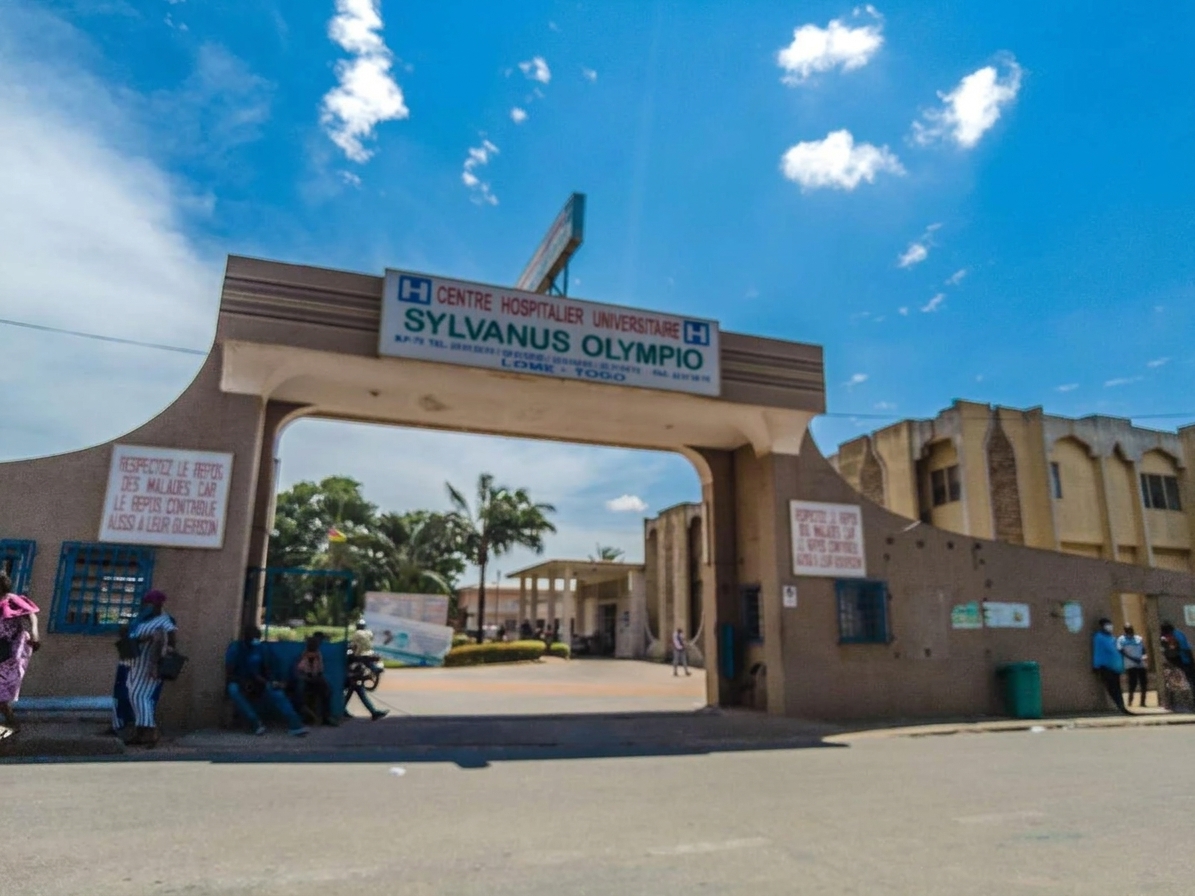
the ground, healthcare professionals welcome the reform. Alaba Adjovi Délali, a
state-registered midwife at the Sylvanus Olympio University Hospital Center, is
delighted with this harmonization. "We are particularly proud of this
dress code. It highlights the distinction and uniqueness of our profession.
Every patient who enters the Sylvanus Olympio University Hospital Center now
knows that they are dealing with a midwife because of her uniform. Patients no
longer have to worry about who to talk to. They used to get confused, unable to
distinguish between midwives, doctors, and surgical technicians. With this
dress code, everyone can clearly identify the professionals. What's more, we
feel very comfortable in this new uniform. It enhances our role."
Through
this reform, the government aims to project the image of a more organized,
transparent, and efficient healthcare system serving the Togolese people.
Raymond
DZAKPATA