
Mental health: 26 countries in West and Central Africa commit to accelerating reforms by 2030
- Posted on 20/07/2026 15:02
- Film
- By raymonddzakpata@sante-education.tg
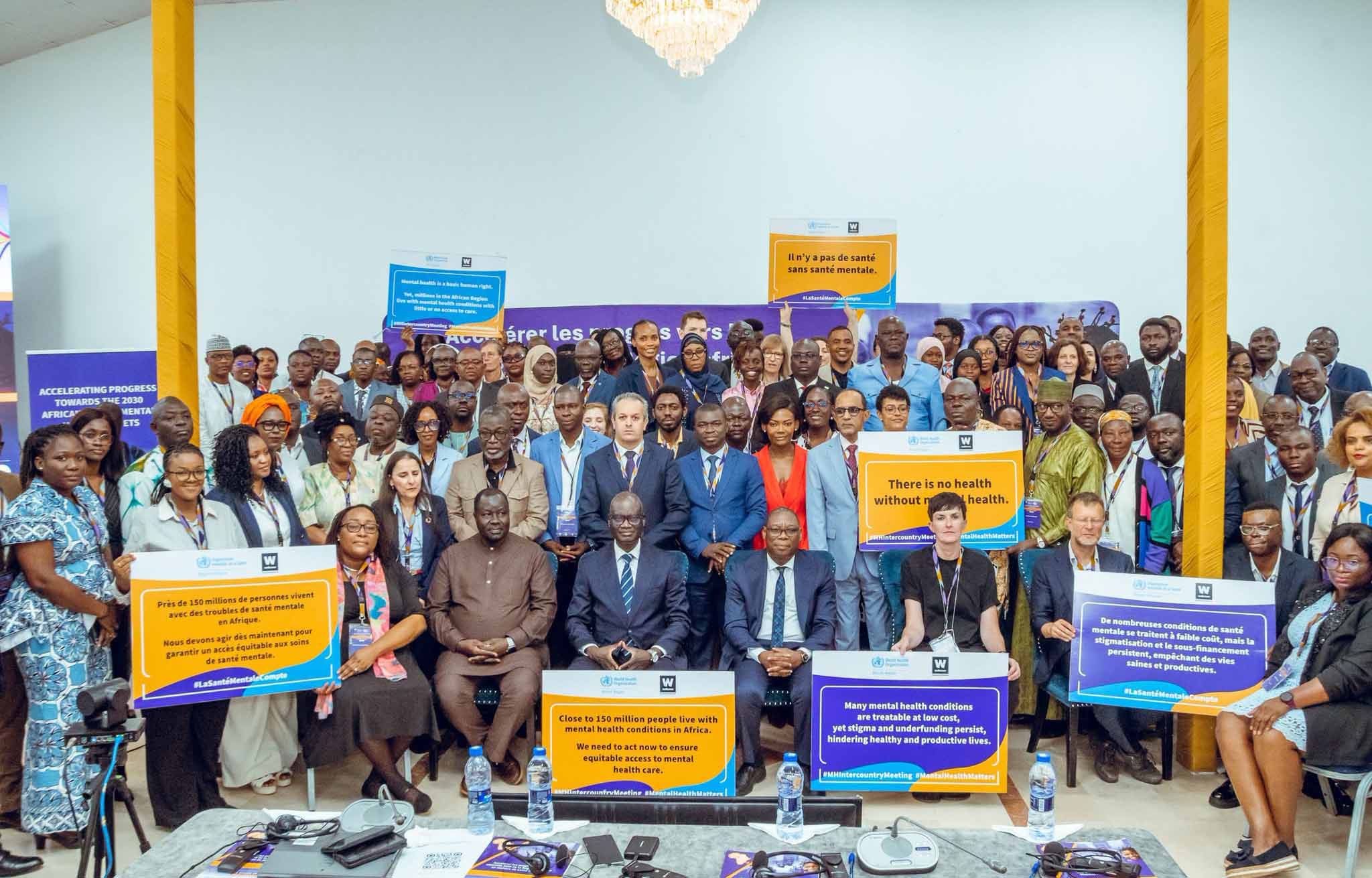
Extract from the article: Experts and policy-makers from 26 countries in West and Central Africa, who gathered in Lomé at the initiative of the World Health Organisation’s (WHO) Regional Office for Africa, reaffirmed their commitment to strengthening mental health systems ...
Experts
and policy-makers from 26 countries in West and Central Africa, who gathered in
Lomé at the initiative of the World Health Organisation’s (WHO) Regional Office
for Africa, reaffirmed their commitment to strengthening mental health systems
from 15 to 18 July 2026 in Lomé. The aim was to develop accessible, human
rights-based services integrated into primary health care, in line with the
regional targets set for 2030.
Over
four days, Lomé hosted the Inter-country Learning Meeting on Mental Health in
West and Central Africa. Organised by the WHO Regional Office for Africa with
the support of the Akwaaba Trust, the meeting brought together experts,
government officials and technical partners from 26 countries to take stock of
progress made and identify priority actions to improve mental health care in
the sub-region.
The
meeting enabled participants to exchange best practices, share national
experiences and define concrete measures aimed at bringing mental health
services closer to communities.
Progress,
but persistent challenges
Despite
growing political commitment, indicators show that mental health remains an
underdeveloped sector in the African Region.
To
date, 29 of the Region’s 47 Member States have a national mental health policy
or strategy. However, only 17 countries have aligned these documents with
international human rights standards. Even more worrying is the fact that only
seven Member States have effectively integrated mental health services into
primary health care, despite this being regarded as the essential gateway to
care that is accessible to all.
According
to Dr Benido Impouma, Director of Health Promotion, Disease Prevention and
Control at the WHO Regional Office for Africa, the progress made must now be
consolidated.
“Everyone
living with a mental health condition deserves to be treated with dignity,
respect and compassion. Progress has certainly been made, but we must redouble
our efforts to strengthen rights-based and community-centred care, whilst
building resilient health systems that ensure no one is left behind,” he
said.

Dr
Hamadou Nouhou, WHO Representative in Togo
Likewise,
for the WHO Representative in Togo, Dr Hamadou Nouhou, mental health is an
essential resource that enables everyone to realise their full potential. The
challenges remain significant, but they are not insurmountable. “By
strengthening multisectoral action, ensuring sustainable investment and further
integrating mental health into primary health care, we can bring about lasting
improvements in mental health outcomes and build a healthier future for
generations to come,” he said.
Towards
more accessible and inclusive services
Discussions
focused largely on integrating mental health into primary healthcare,
developing community-based services and ensuring the active participation of
people with lived experience of mental health conditions in the development of
public policy.
Participants
also called for the strengthening of legislative frameworks to better protect
the rights of people living with mental health conditions. They emphasised the
need for closer collaboration between the health, education, social protection
and justice sectors.
Another
priority was the expansion of the WHO’s ‘Mental Health Gaps Action Programme’
(mhGAP), which trains non-specialist healthcare professionals to manage mental
health conditions in areas where there are few psychiatrists and psychologists.
Funding
at the heart of the debate
The
issue of sustainable funding featured prominently in the discussions.
Delegations explored various avenues for increasing national investment whilst
strengthening support from technical and financial partners.

Dr
Kate Martin, Head of Sector Development & Learning at the Wellcome Trust
Dr
Kate Martin, Head of Sector Development and Learning at the Wellcome Trust,
pointed out that there remain numerous barriers to accessing care.
“The
barriers to improving access to mental health care are political, financial,
cultural and institutional. Overcoming them requires coordinated action,
sustained commitment and genuine collaboration between all stakeholders in
order to bring about meaningful change,” she emphasised.
A
priority for emergencies and young people
Participants
also emphasised the need to integrate mental health and psychosocial support
into preparedness and response mechanisms for health and humanitarian
emergencies. Lessons learnt from the Ebola epidemics and other crises
demonstrate the importance of supporting communities before, during and after
emergencies.
A
dedicated session on the mental health of children and adolescents enabled
young advocates to participate directly in the discussions and share their
expectations regarding public policies tailored to their circumstances.
According
to Dr Wotobe Kokou, Secretary-General of Togo’s Ministry of Health, Public
Hygiene, Universal Health Coverage and Insurance, only through enhanced
regional cooperation will it be possible to meet the scale of the needs.

Dr
Wotobe Kokou, Secretary-General of Togo’s Ministry of Health
“Given
the growing scale of mental health problems, it is imperative to strengthen
regional cooperation, promote access to mental health services and combat the
stigma that still prevents many people from seeking the care they need,” he
said.
Focus
on the 2030 targets
The
Lomé meeting was the second in a series of sub-regional consultations organised
by the WHO, following the one held in Johannesburg in May 2026 for Eastern and
Southern Africa.
These
consultations support Member States in achieving the regional targets set for
2030. These targets include ensuring that all countries have a national mental
health policy, that 70 per cent allocate a specific budget line to this area,
that 95 per cent regularly monitor mental health indicators, and that 60 per
cent effectively integrate these services into primary health care.
Raymond
DZAKPATA