

In northern Togo, the WFP is strengthening food resilience, from the fields to school canteens
- Posted on 23/10/2026 18:00
- Film
- By raymonddzakpata@sante-education.tg
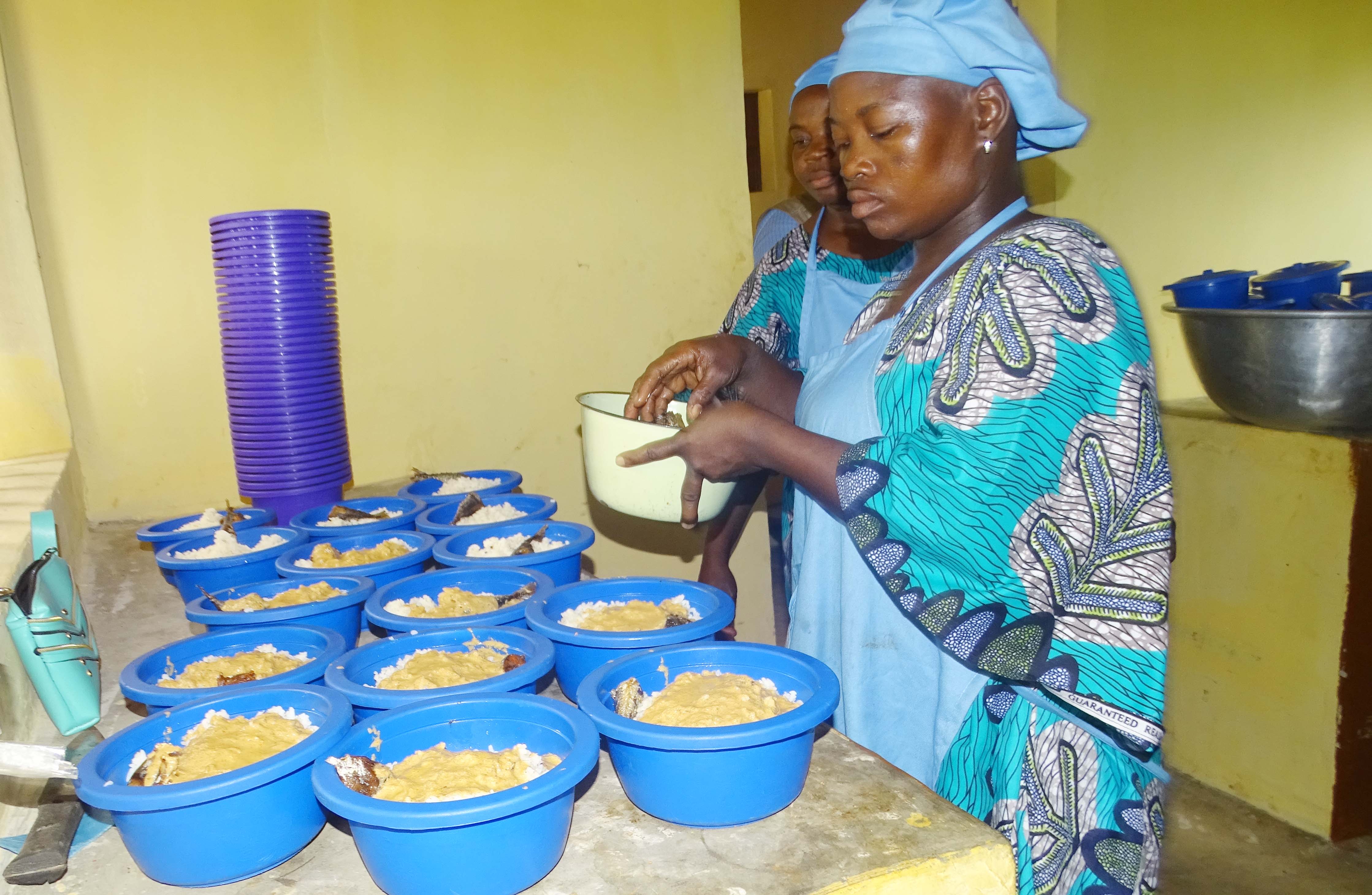
Extract from the article: Through the integrated school feeding programme based on local production and the Food-for-Asset (FFA) programme, the World Food Programme (WFP) is supporting the Togolese government in its efforts to improve schoolchildren’s diets, support farmer...
Through the integrated school feeding
programme based on local production and the Food-for-Asset (FFA) programme, the
World Food Programme (WFP) is supporting the Togolese government in its efforts
to improve schoolchildren’s diets, support farmers and strengthen the
resilience of vulnerable communities. In the Kara region, the achievements
observed illustrate an approach that combines food security, good nutrition,
local development and the conservation of natural resources.
In Kassi, in the Kara region of northern Togo, access to water is a key driver for the development of market gardening. Along the river that runs through the village, dozens of farmers grow crops such as tomatoes, okra, green chillies and adémè. However, before the construction of market garden wells, the water supply was a major constraint for these farmers.
‘Before the wells were built, we used water
from the river. We had to walk about 300 metres to fetch water to irrigate our
fields. By the end of October, the river would already have dried up and we
would run out of water. Now, thanks to the wells, we have water nearby and
available at all times,” says Mazabalo Yobou, one of Kassi’s leading market
gardeners.
In
total, 20 market-gardening wells have been built in the village as part of the
‘Food for Assets (FFA)’ programme. Implemented by the Togolese government with
the support of the World Food Programme (WFP), and thanks to financial backing
from Australian Aid, this programme aims to strengthen the livelihoods of
vulnerable communities through the construction of infrastructure and
facilities tailored to their needs.
Infrastructure to boost production
and income
Access
to water is facilitating the development of agricultural activities in Kassi.
Essotom Potoh, who has been growing tomatoes, okra, chillies and adémè since
2023, has seen his farm evolve. The availability of nearby water has enabled
him to expand the area under cultivation and increase his harvests, with
positive effects on his family’s income.
In addition to the market garden wells, the project has also enabled the rehabilitation of rural tracks to facilitate the transport of crops and access to markets. These achievements stem from a participatory approach that places communities at the heart of identifying needs and choosing the assets to be put in place
‘In this village, the project’s
primary impact is social and the second is economic. On the social front, the
market garden brings together producers from four villages who work together
very closely. On the economic front, we are seeing improved yields and an
increase in the area under cultivation,” explains Manawa
Charlotte Gnassibou, the FFA focal point at the National Agency for Grassroots
Development Support (ANADEB) in the Kara region.
Support
also covers the development of new plots and the production of compost. Some
producers have been able to purchase motorised pumps thanks to the growth of
their businesses. Through this support, the programme aims to strengthen the
beneficiaries’ productive capacities and promote a sustainable improvement in
their living conditions.
Co-ordinated
by the Ministry responsible for Grassroots Development, through ANADEB, with
the support of the Ministries of Agriculture and National Education, the
programme operates in several complementary areas: land restoration,
reforestation, water collection and irrigation infrastructure, access roads and
improved stoves.
Restoring land and preserving natural
resources
In
the canton of Défalé, the Lao mountain range is facing land degradation and the
drying up of certain water sources. To help restore this environment, local
communities began planting saplings in June 2024, with the programme’s support.
The work is based on watershed management, an approach designed to slow down
rainwater runoff, encourage its infiltration into the soil and improve
conditions for vegetation growth.
Water
and soil conservation works are being carried out on the slopes to limit
erosion.
In
the fields, ditches help to slow down the flow of water coming down from the
mountains, reduce the risk of crop damage and promote the recharge of
groundwater.
In
the Kara region, four major mountainous sites are benefiting from these
measures. At the Tchikawa site, 19,000 seedlings have been planted, according
to information gathered from project stakeholders. More than 600 people are
reported to have taken part in the work, according to Pitikabalo, chair of the
village development committee.
These
developments help to create more favourable conditions for land restoration and
the continuation of agricultural activities. They form part of an approach to
strengthen communities’ resilience to the effects of soil degradation and
climate-related hazards.
Improved stoves: support for
households
The
programme also supports the manufacture of improved stoves using local
materials. These stoves are designed to reduce firewood consumption and make
cooking easier for households.
In
Kassi, Awéki Symkpawé uses an improved stove to prepare tchoukoutou, a
traditional local drink. Tchoro Malawé, who has also been trained in the
manufacture of these stoves, is planning to set up an income-generating
activity.
“We’ve learnt how to make these stoves. Now I
can easily make them and also help other households in need,” she explains.
Beyond
their domestic function, these stoves thus provide beneficiaries with a skill
they can use to meet the needs of their community and, potentially, develop an
economic activity.
The
FFA also plans to build beneficiaries’ capacity in the management and
maintenance of the assets produced, in order to promote their sustainable use.
School canteens supplied by local
produce
Strengthening
food resilience also involves school feeding. Since 2020, the Togolese
government has been implementing a national school feeding programme to which
the WFP contributes through the integrated school feeding approach based on
local production, known as ‘Home Grown School Feeding (HGSF)’.
This
approach aims to improve pupils’ diets whilst creating market opportunities for
local farmers. It is based on a system that combines school meals, good
nutrition, market gardening, food processing and the supply of canteens by
producers’ organisations.
“A child who comes to school must be
well-nourished and able to stay healthy in order to learn and achieve better
results,” explains Gnandi Tabé, WFP programme assistant in Kara.
According
to data provided during the mission, the scheme covers 242 schools and benefits
around 77,824 schoolchildren in the Kara and Savanes regions. It also relies on
242 vegetable-growing units, 726 smallholder producer organisations and 1,800
women from cooperatives trained in food processing.
The
programme is supported by several partners, notably the European Union, German
development cooperation through KfW, Korean development cooperation (KOICA) and
France.
In
the schools involved, vegetable gardens produce vegetables used in meal
preparation. Gardeners are trained in compost production, with support from the
Institute for Advice and Technical Support (ICAT), to promote production
practices tailored to the schools’ needs.
Some
schools also have poultry-rearing units and processing equipment, including
grain and spice mills. These facilities help to facilitate meal preparation
and, depending on how the units are run, generate additional revenue for the
canteens.
Local producers: a vital link in the
school feeding chain
The
link between the canteens and the producers is a central element of the scheme.
In the communities concerned, producer organisations are identified to supply,
in particular, maize, rice and cowpeas.
In
collaboration with the FAO, producers receive technical guidance as well as
support in the form of seeds and fertiliser. The aim is to boost local
production and help ensure a steady supply of foodstuffs for the canteens.
The
supply mechanism has also changed. According to the WFP, supported farmers must
now hand over 25 per cent of their harvest to the canteen free of charge,
whilst the remainder can be sold at market price.
“Thanks to this support, our yields have
increased. For example, the amount of maize I am going to harvest far exceeds
what I produced last year on the same area of land. The fertiliser and seeds
are of very good quality,” says Tchilabalo Binéwaï, chair of the Kpinzindè
Planned Agricultural Development Zone (ZAAP).
This
link between agricultural production and school meals aims to support producers
whilst helping to supply the beneficiary schools. It also promotes the
development of local supply chains, in which farming communities play a part in
meeting pupils’ food needs.
In Houloun, changes reported in
schools
At
EPP Houloun, which joined the scheme in 2024–2025 thanks to support from German
development cooperation via KfW, school officials report an improvement in
school attendance and exam results.
According
to the headteacher, Nadjombé Kpante, 79 pupils sat the CEPD before the canteen
was introduced, of whom 29 were declared successful. In the following session
mentioned by the headteacher, 63 candidates sat the exam and 47 passed.
At
the public nursery school in Houloun, the headteacher, Heyou Essodessam Edwige,
also highlights the changes observed in the children’s behaviour in class.
“Before the canteen, the children were in a
hurry to go home for their meals. Since we’ve had this canteen, they’ve been
paying attention because they eat on time and the meals are balanced and
healthy,” she explains.
The
canteen also provides support to families, particularly parents who have to
balance farm work with preparing meals. By enabling children to eat their meals
at school, the scheme helps to ease some of the daily pressures on households.
These
accounts illustrate the benefits that local stakeholders associate with school
feeding. They also highlight the importance of continuing to monitor indicators
of attendance, regularity and academic achievement in order to better assess
the programme’s long-term results.
An integrated approach to building
resilience
Through
the FFA and HGSF programmes, the WFP supports the Togolese government in an
approach that combines support for production, the conservation of natural
resources, improved access to food and the strengthening of community
capacities.
The
market garden wells in Kassi, land restoration works, rural tracks, improved
stoves and school vegetable gardens demonstrate the diversity of the
interventions undertaken. Their complementary nature opens up opportunities to
consolidate livelihoods, promote local production and strengthen school feeding
programmes.
The
continuation and expansion of these initiatives rely on the coordinated
mobilisation of public authorities, communities, producer organisations, and
technical and financial partners. In a context characterised by food insecurity
and climate challenges, these interventions provide a framework for
collaboration to support solutions rooted in local realities and contribute to
the resilience of local populations.
For
the WFP and its partners, the challenge is to consolidate the progress made,
support communities in managing the assets they have built up, and continue
efforts to foster a more resilient food system that serves the people of Togo.
Raymond DZAKPATA