
The role of veterinary services in the ‘One Health’ approach: Interview with Dr Mabalo Kossi, veterinary surgeon and President of the National Order of Veterinary Surgeons of Togo
- Posted on 03/11/2026 16:50
- Film
- By raymonddzakpata@sante-education.tg
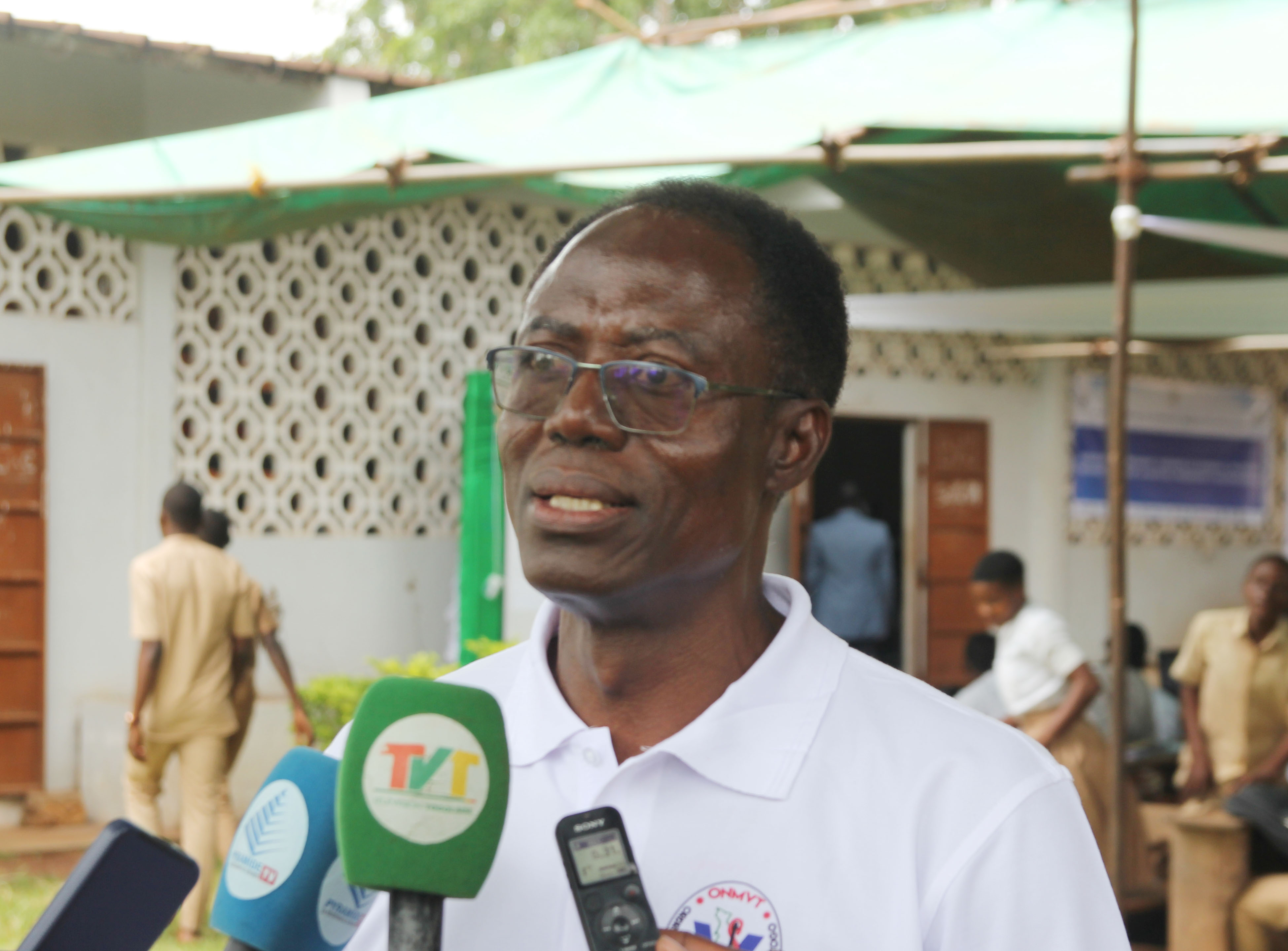
Extract from the article: In this interview, Dr MABALO Kossi, a veterinary surgeon and President of the National Order of Veterinary Surgeons of Togo, explains why the work of veterinary services goes far beyond simply caring for animals...
“Veterinarians
also protect human health and the environment”
Under the ‘One Health’ approach, human health, animal
health and environmental health are closely interlinked. Veterinary services
therefore play a major role in the surveillance, prevention and control of
zoonotic diseases, as well as in the protection of biodiversity and food
safety. In this interview, Dr MABALO Kossi, a veterinary surgeon and President
of the National Order of Veterinary Surgeons of Togo, explains why the work of
veterinary services goes far beyond simply caring for animals.
SANTE-EDUCATION:
What is the role of veterinary services in the ‘One Health’ approach?
Dr Mabalo
Kossi: When we talk about a vet, we generally think of a professional who works
with animals using nothing but a syringe.
It is important to understand that humans have always lived in close
interaction with animals, whether for companionship, livestock farming or the
consumption of animal products. Humans and animals share the same environment.
This proximity also means that humans can contract
diseases from animals. This is the case with zoonotic diseases, which include
rabies, tuberculosis, brucellosis, anthrax and even Ebola.
Veterinarians must therefore play a part in combating
these diseases effectively. This involves, in particular, the surveillance of
diseases of animal origin. This requires veterinary epidemiologists tasked with
monitoring the progression of these diseases and helping to draw up action
plans to control or eradicate them. Veterinarians thus indirectly help to
protect humans, because if a disease is eliminated or controlled in animals,
the risk of it being transmitted to humans is also reduced or even eliminated.
This is the whole point of the ‘One Health’ approach.
Animals, humans and the environment are interconnected. Vets work directly with
animals, but this work has implications for human health and, indirectly, for
the environment.
What role do
veterinary services play in protecting the environment and biodiversity?
The role of veterinary services is not limited to pets
or farm animals. It also extends to wildlife and biodiversity.
There are interactions between wild animals and
domestic animals, but also between wild animals and humans. These various
connections can have health implications.
‘Veterinarians therefore also play a part in
preserving biodiversity and protecting wildlife, helping to maintain a certain
balance between different ecosystems.’
The environmental dimension is important in the ‘One
Health’ approach, as animal health, human health and the balance of ecosystems
are interdependent.
Why is
veterinary surveillance important for public health?
Veterinary surveillance enables the detection of
diseases in animals, as well as in food, and allows measures to be taken before
they are transmitted to humans.
All livestock farms should therefore be subject to
veterinary supervision. This monitoring enables the health status of animals to
be tracked and action to be taken when a disease is detected.
Surveillance also covers products of animal origin.
For example, milk from an infected herd can be a source of transmission for
certain diseases, notably brucellosis and tuberculosis, when consumed fresh.
Veterinary control therefore helps to reduce risks to
consumers.
What is the
role of veterinary services in preventing antimicrobial resistance?
When a vet treats an animal or a herd. They ensure the
proper use of veterinary medicines, particularly antibiotics. This involves
choosing the appropriate treatment, adhering to the prescribed doses and
raising farmers’ awareness of the need to observe the withdrawal period – that
is, the period that must elapse after administering a medicine before the meat,
milk or other products from the treated animals can be consumed.
The responsible use of antibiotics helps to limit the
emergence and spread of antimicrobial resistance, a phenomenon that can
compromise the effectiveness of treatments in both animals and humans. This
precaution is particularly important in the context of the antimicrobial
resistance crisis currently facing the world.
Veterinary services therefore play a vital role in
preventing animal diseases, regulating the use of medicines and monitoring
their use. Through these actions, they help to protect animal health, human
health and, more broadly, the health of the environment, in line with the ‘One
Health’ principle.
What is the
key message to take away from this ‘One Health’ approach?
Animals are important to communities, but their close
proximity to humans requires certain precautions and professional oversight.
Veterinary services play a vital role in this protection.
They are involved in the surveillance of animal diseases, the prevention of
zoonoses, health checks on livestock and animal products, as well as the
protection of wildlife and biodiversity.
The ‘One Health’ approach thus reminds us that human
health, animal health and the environment cannot be considered in isolation. By
protecting animal health, vets also help to protect human health and the
balance of ecosystems.
Interview by
Raymond DZAKPATA