
Require meat from approved slaughterhouses
- Posted on 21/09/2022 17:56
- Film
- By raymonddzakpata@sante-education.tg
Extract from the article: Clandestine slaughter of animals for slaughter is still very common in the city of Lomé. This bad practice escapes the sanitary inspection of the veterinary services, and exposes the handlers of these meats and their consumers to the risks of...
Clandestine slaughter of animals for slaughter is still very common in
the city of Lomé. This bad practice escapes the sanitary inspection of the
veterinary services, and exposes the handlers of these meats and their
consumers to the risks of contamination by various infectious agents. These
agents are likely to be the cause of zoonoses or food-borne diseases. The WHO estimates that 600 million people worldwide
become ill each year from eating contaminated food and 420,000 die. The burden
of foodborne disease is particularly high in Africa, where the resulting
illnesses and deaths are comparable to those caused by major infectious
diseases such as malaria, TB and HIV/AIDS.
No to clandestine
slaughter
The NGO Vétérinaires Sans Frontières Switzerland, concerned about the
health and food security of the population, is intensifying its efforts to
raise awareness against the clandestine slaughter of animals for slaughter.
According to Dr. Géraud Hellow, Country Director of VSF-Switzerland in Togo,
"some butchers are in the habit of slaughtering goats, sheep or other
animals outside of approved slaughterhouses. These butchers expose themselves
to the risks of zoonoses and also expose the consumers of their meat. In
addition, they contribute to the spread of animal diseases. Consumption of
uninspected meat exposes handlers and consumers to dangerous and deadly
diseases such as anthrax, tuberculosis, brucellosis, or food-borne illnesses.
Where to find
slaughterhouses in Lomé ?
Apart from the old slaughterhouse located at the port of Lomé, the state
has set up two improved slaughter areas in Agoè Zongo and Gbossimé. A
slaughtering area is a delimited and equipped space for the various stages of
slaughtering the animal until the carcass is ready for cutting. It generally
includes a slab that can be washed and used for slaughtering, a roof, and
various equipment for hanging the carcasses. These facilities and equipment
ensure proper hygiene.
Butchers working in the slaughter areas of Gbossimé and Zongo have
benefited from several training and awareness-raising sessions on hygiene. As
Saibou, a butcher in Gbossimé, explains: "At the Gbossimé slaughterhouse,
veterinary officers examine the meat before it is distributed, and the service
is cheaper. However, outside this slaughter area, the meat is not controlled
and it is dangerous.
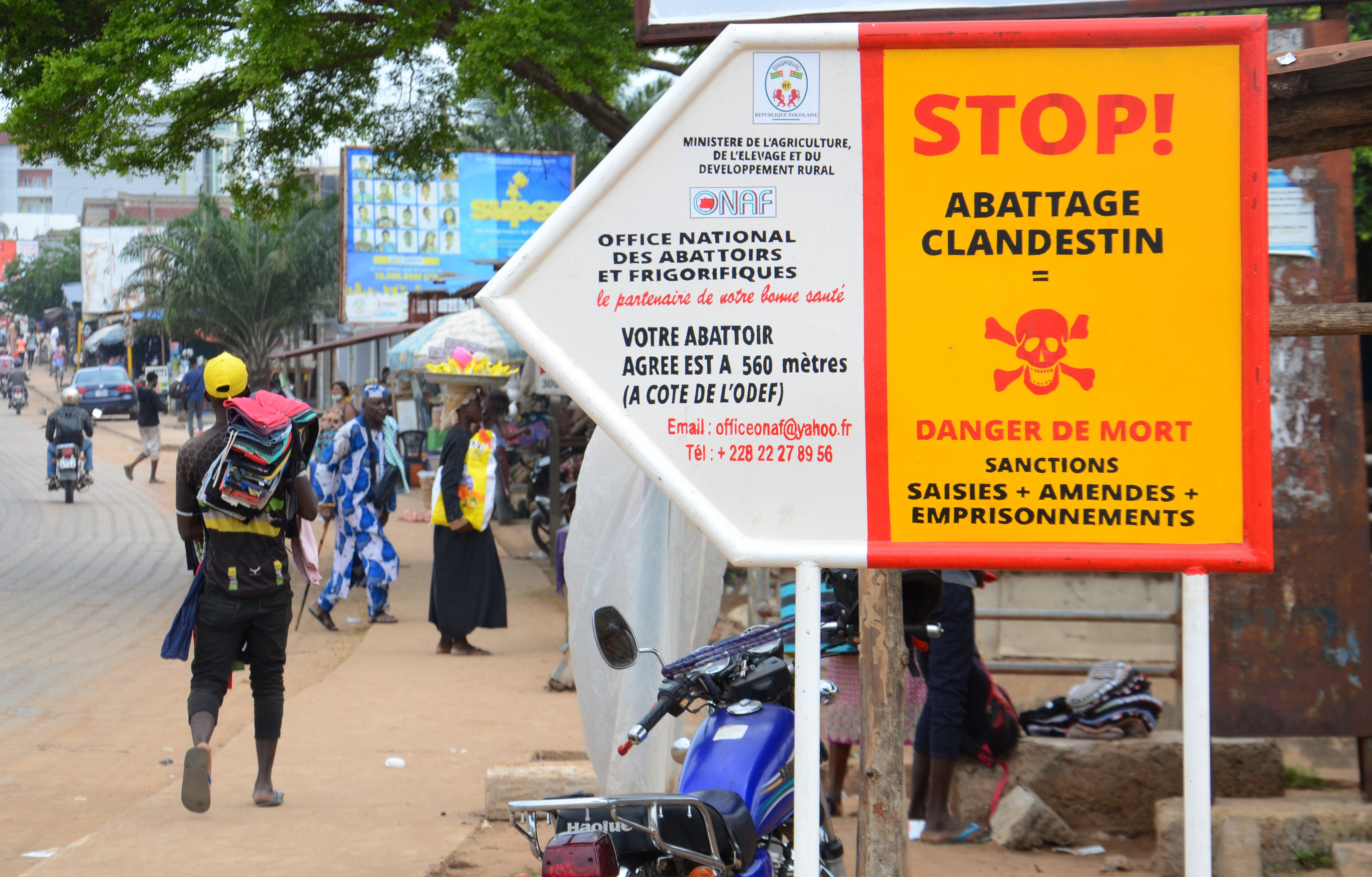
In order to help improve the visibility of the Gbossimé slaughter area,
the NGO VSF-Suisse supported the Office National des Abattoirs et Frigorifiques
(ONAF) in installing four directional signs to enable people to easily find
this site.
Source:
VSF-Suisse