
Health risks in the transport of meat carcasses
- Posted on 12/10/2022 16:46
- Film
- By raymonddzakpata@sante-education.tg
Extract from the article: In Lomé, the daily availability of small ruminant meat on the market plays an important role in the population's consumption of animal products. However, the transport of this meat to supply consumer markets is marked by numerous shortcomings...
In Lomé, the daily availability
of small ruminant meat on the market plays an important role in the
population's consumption of animal products. However, the transport of this
meat to supply consumer markets is marked by numerous shortcomings. Indeed,
transport practices and the means used are unconventional. Because of the
absence of specific transport equipment for this category of food, the actors
(butchers, restaurant owners, consumers) resort to non-conventional means of
transport according to their convenience. Most often, motorbike taxis commonly
called 'zémidjan', personal motorbikes and tricycles are used. Taxis or
personal vehicles are rarely used, given the costs of transport and their
impracticality compared to motorbikes and tricycles. The only problem is that
the packaging of the meat in these types of transport obviously does not
guarantee good hygiene of the meat, which is very often in contact with the
environment. This increases the dangers such as dust, smoke from exhaust pipes
and various contaminations for the meat. These means of transport lack all the
amenities that a fresh meat transport vehicle should offer, as stipulated in
the standards, which specify the use of isothermal, refrigerated or
heat-resistant transport vehicles with suitable equipment.
Lack of
hygiene in the transport of small ruminants, "a sword of Damocles hanging
over the head" of the population
The precariousness of meat
transport conditions can be observed every day in markets, slaughterhouses,
sales outlets and food preparation areas. But unfortunately, whether they are customers-consumers,
or actors (butchers-restaurateurs, consumers), they all watch helplessly as the
phenomenon spreads. It is not uncommon to see meat carcasses transported on
their backs or in direct contact with filthy clothes covered in fresh, coagulated
blood. Sometimes carcasses are transported on the back of motorbike taxis or
tricycles without any protection or support, thus exposing them to dusty air
and various contaminants. In addition,
the vehicles used by butchers are also used to transport other food and
non-food products (batteries, waste oil); these products may come into contact
with or spill onto the meat during transport.
These transport conditions cause
the meat to be contaminated with particles that are generally visible to
consumers. These particles could endanger their health by transmitting germs
such as salmonella, which are responsible for serious typhoid and paratyphoid
illnesses, but also for food poisoning in humans. These germs cause serious
disorders such as violent and sometimes bloody diarrhoea, nausea, vomiting,
fever, abdominal pain, drop in blood pressure, hypothermia and headaches.
Efforts must be made by the
municipal and health authorities to better regulate this phenomenon in order to
preserve the health of the population.
Adapted
solutions for the healthy transport of small ruminant meat
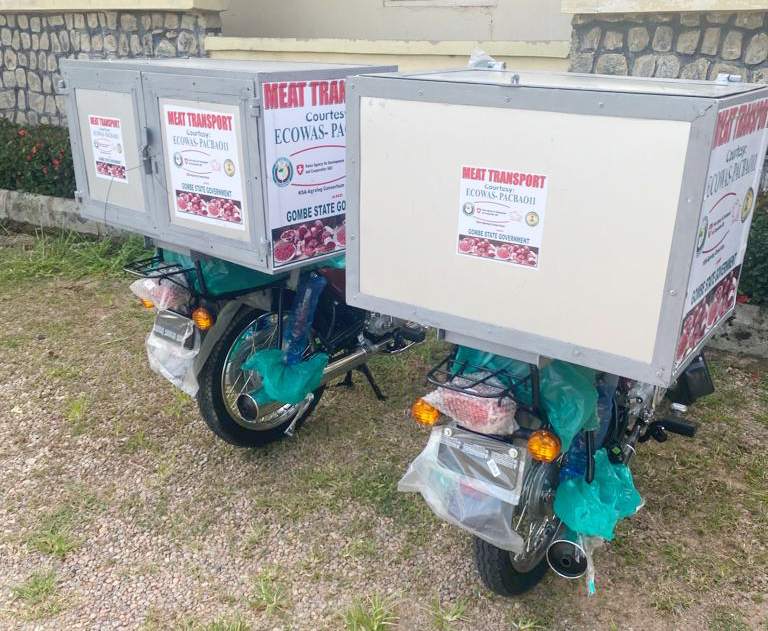
Solutions exist to improve the conditions of transport of meat carcasses. In Nigeria, for example, butchers in Gombe State have acquired motorbikes equipped with aluminium crates at the back. This practice may inspire actors in Lomé. However, the authorities need to be more involved in organising transport arrangements and in facilitating the training and financing of actors. Also, the actors need to be better organised.
Source : VSF-Suisse