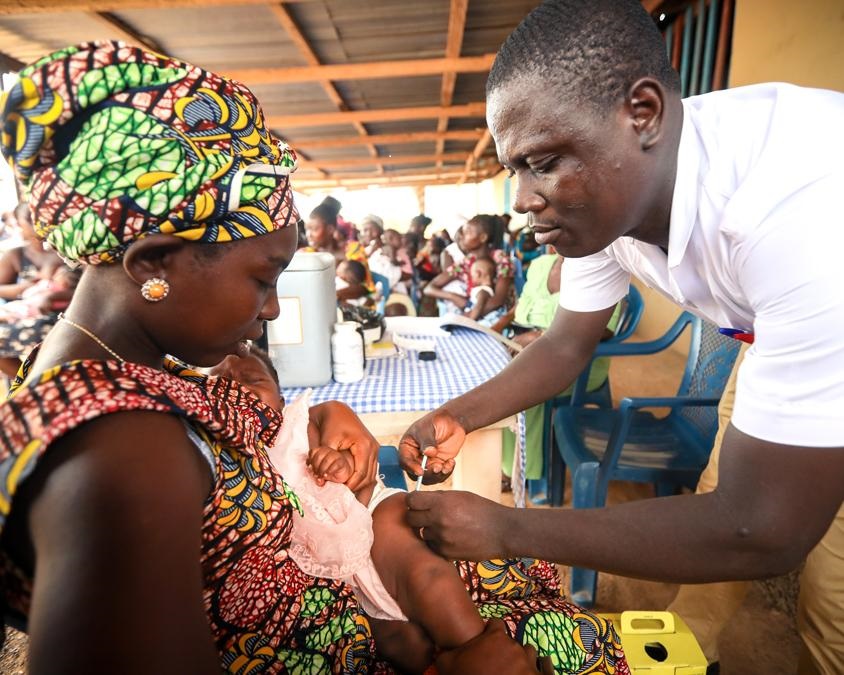

Harmattan: protecting infants from bronchiolitis
- Posted on 26/01/2023 16:40
- Film
- By abelozih@sante-education.tg

Extract from the article: Mal connue au Togo, la bronchiolite touche beaucoup d'enfants de moins de 2 ans. C’est une maladie bénigne qu'il est possible de traiter. Dans certains cas, des complications sont redoutées, en particulier une élévation importante de la température e
Poorly
known in Togo, bronchiolitis affects many children under 2 years old. It is a
benign disease that can be treated. In some cases, complications are feared, in
particular a significant rise in temperature and respiratory distress.
Bronchiolitis
occurs in the form of epidemics in cooler weather, or when the harmattan blows.
Bronchiolitis is a respiratory disease that affects children under the age of
two. Caused by a respiratory virus called syncitial virus (RSV), which is
usually transmitted through saliva, sneezing, coughing and hands, this
infection attacks the bronchioles, the small bronchi, of the child.
Transmission
and signs
Bronchiolitis
is very contagious. The virus present in saliva and nose secretions is
transmitted: directly from person to person, through bronchial secretions such
as sneezing, coughing, blowing the nose, or indirectly, through hands or
objects soiled by saliva such as toys, towels, contaminated food or drinks.
According
to Mrs. Nang Micheline Samboung, Health and Social Life Assistant at the Home
and Hospital Assistance Service of the NGO Volontaires Internationaux pour la
Promotion de la Sante en Afrique (SADH-VISA), « bronchiolitis starts
with a simple cold, a blocked or runny nose, and the child coughs a little.
Then, the cough is more frequent, the breathing can become wheezy. The child
may have trouble breathing and have trouble eating and sleeping. The child may
have a fever. In most cases, bronchiolitis heals spontaneously after 5 to 10
days, but the cough may persist for 2 to 4 weeks ». But it can also be
responsible for serious complications in children under three months old,
premature babies or those with heart or respiratory conditions.
Basic
rules of prevention
« To
avoid any risk of hypothermia in children, it is advisable to wear sweaters,
loose and warm clothing and hats. Concerning the skin and the drying of the
mucous membranes, moisturizing care with shea butter is recommended during the
harmattan period », advises Micheline Samboung.
To
limit the baby's exposure to germs, simple hygiene gestures are sufficient,
such as: « carefully cleaning baby bottles after each use, and putting
the baby's toys under soapy water from time to time. Also remember to change
his sheets regularly and to wash his "doudou" » insists
Mrs. Samboung. In addition, to protect the baby from this disease, Dr Dieudide
Dovonou, General Practitioner at the clinic "Le Safran" located in
the Baguida district of Lomé advises « to avoid kissing and passing
from arm to arm and to air the child's living space daily, especially the
bedroom to reduce the concentration of germs, to avoid as much as possible
crowded and closed places, or public transport.
Parents to make sure that the baby's vaccinations are up to date ».
Parents
should keep their baby away from cigarette smoke. It weakens their bronchial
tubes and makes it harder for them to breathe. In case of bronchiolitis,
parents are invited to quickly consult their doctor.
Attention
to parents with a cold
If
you have a cold or respiratory infection, use a disposable tissue to blow your
nose, cough, sneeze or spit, and throw it away immediately. Cough and sneeze
into the elbow. Wearing a mask is strongly recommended before approaching an
infant, especially if you have a cold. Whether you have a cold or not, when you
take care of babies, you should wash your hands regularly. Because the virus
responsible for bronchiolitis can live there for up to thirty minutes.
William
O.