
FP2030 Programme: Overcoming challenges and improving access to family planning in Africa
- Posted on 19/06/2023 18:04
- Film
- By raymonddzakpata@sante-education.tg
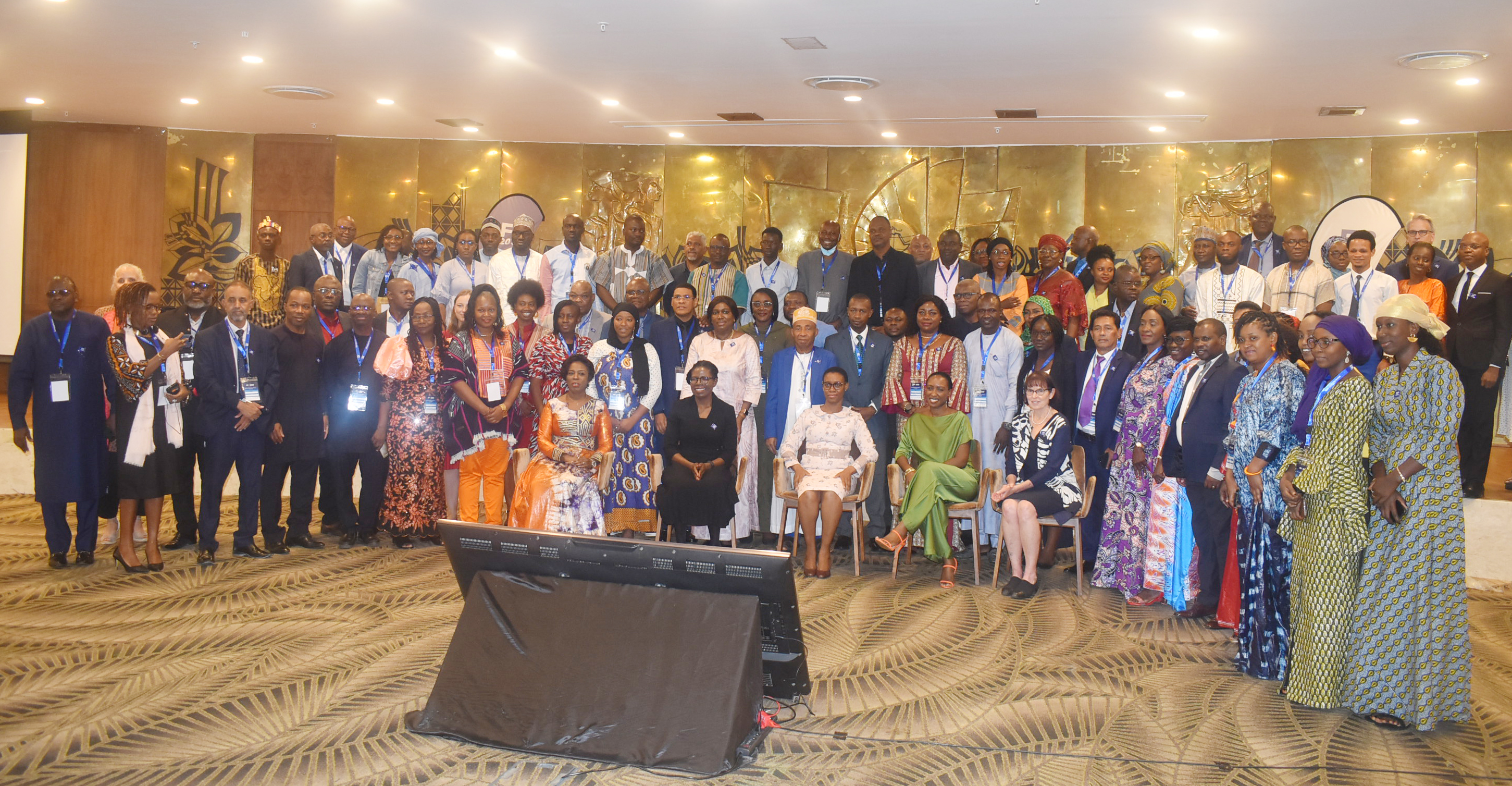
Extract from the article: Lomé is hosting a regional workshop for French-speaking family planning focal points (FP2030) from 19 to 22 June 2023. Over two days, government players, civil society organisations, youth groups and technical and financial partners will discuss...
Lomé is hosting a regional workshop for
French-speaking family planning focal points (FP2030) from 19 to 22 June 2023.
Over two days, government players, civil society organisations, youth groups
and technical and financial partners will discuss and develop strategies to
improve access to family planning services. The meeting was launched by Dr
Mamessilé Aklah Agbah-Assih, Minister for Universal Access to Healthcare. The
UNFPA Resident Representative, Josiane Yaguibou, the Director of the
Ouagadougou Partnership Coordination Unit, Marie Ba, and the Executive Director
of FP2030, Dr Samukeliso Dube, were also present.
Under the theme "A renewed vision: Accelerating FP using the regional model",
the workshop will provide delegates from all over French-speaking sub-Saharan
Africa with an opportunity to discuss the progress made, the remaining
challenges and the strategies to be adopted to achieve the objectives set by
the FP2030 programme.
Over four days, the discussions will focus on family
planning, in particular the financing of family planning programmes, including
the mobilisation of national resources, accountability through strengthening
and the establishment of existing national action plans. There will also be
discussions on protecting contraceptive and reproductive health supply chains
and promoting high-impact practices for implementing and scaling up family
planning, as well as strategies for implementation in emergency situations and
promoting resilience to advance the FP2030 agenda in the respective countries.
UNFPA Resident Representative Josiane Yaguibou
underlined the convergence of vision between FP2030 and UNFPA, saying: "We are working to ensure that every person
has access to quality family planning information and services, delivered
through approaches that empower women and girls, affirm individual human rights
and leave no one behind... We are more aware than ever of the value and
necessity of innovative regional partnerships such as FP2030 that advance the
rights of people everywhere to access reproductive health services safely and
on their own terms." She expressed her satisfaction at the holding of
this focal workshop, the first of its kind led by the new FP2030 regional
centre for North, West and Central Africa, and expressed her enthusiasm for
continuing the conversation.
In her keynote speech, Mamessilé Aklah Agbah-Assih,
Minister for Universal Access to Healthcare, reminded delegates of the efforts
being made in Africa, and in Togo in particular, to guarantee better health for
the population, especially women and girls. While recalling the challenges
facing governments, she invited participants to propose strategies for
achieving the goals set by the Global Partnership for Family Planning by 2030.
The FP2030 programme, launched at the London
Conference on Family Planning in 2016, aims to accelerate progress in sexual
and reproductive health in developing countries. Its main objective is to
guarantee universal access to quality reproductive health services,
comprehensive sex education and modern contraception by 2030. According to Dr
Samukeliso Dube, Executive Director of FP2030, "FP2030 envisions a future
in which people everywhere have the freedom and ability to lead healthy lives,
to make their own informed decisions about contraceptive use and reproduction,
and to participate equally in society and its development".
This workshop marks an important step towards
achieving this ambitious vision of FP2030 by strengthening collaboration and
developing concrete strategies to improve access to family planning services in
French-speaking African countries. The collective commitment demonstrated at
this event is testament to the willingness of reproductive health stakeholders
to work together to overcome obstacles and advance the family planning agenda
in the region.
Raymond
DZAKPATA