
Acne: understanding the disease to cure it
- Posted on 28/07/2023 20:49
- Film
- By abelozih@sante-education.tg
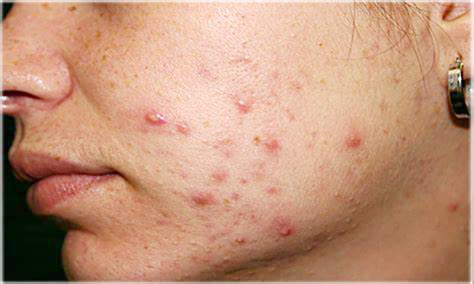
Extract from the article: Points noirs, pustules, boutons et papules sont les indésirables compagnons des adolescences. Pour s’en débarrasser, certains sont prêts à tout : savonnage intensif, masque anti-imperfection, baume purifiant, gel désinfectant, gommage exfoliant. Or c
Black
spots, pustules, pimples and papules are the undesirable companions of
adolescents. To get rid of them, some are ready for anything:
intensive soaping, anti-imperfection mask, purifying balm, disinfectant gel,
exfoliating scrub. This arsenal can prove to be useless or even harmful,
because acne is a chronic disease that is difficult to tame. In addition to
some hygiene advice, a dermatologist should also be consulted.
The face is one of the
regions with the most sebaceous glands. That’s why acne concentrates on it.
Acne is identified by pimples in the skin of the face. Acne affects about 90%
of adolescents but also adults between 20 and 40 years. Skin problem very
common, acne most often appears in adolescence. Most often benign, it can in
some cases take severe forms. « Acne is a disorder of the pilosebaceous
follicle and related to puberty. During puberty there are hormonal disorders
and these cascading that will trigger changes in the skin of the face, and
throughout the chest and back. We can see in some families people who have a
lot of acne than others. It is a genetic factor that is at the root. It is a
pilosebaceous follicle disease that combines several well-identified
abnormalities: a hyperproduction of sebum, skin fat: an obstruction of the
follicular canal, inflammation due to the proliferation of microbial agents»,
stresses Dr Jacques Piham Gnossiké, Dermatologist, Venereologist at the
Gbossimé Dermatology Centre in Lomé.
Causes and risk factors
Acne is of multifactorial origin. « We note the
hormonal surge at puberty. At puberty, regardless of sex, sexual hormones
increase; especially androgenic hormones, which cause the appearance of male
sexual characteristics. Under the effect of this surge, the sebaceous glands
produce more sebum. This increase in sebum production creates a breeding ground
for the growth of Propionibacterium acnes that feed on it », says Dr
Gnossiké, Dermatologist.
There are also hormonal fluctuations in women. Some women see
acne pimples appear 2 to 7 days before they have their menstruation. According
to Dr Jacques Gnossiké, « contraception can also have a positive or
negative role: women who start taking certain birth control pills may see their
acne worsen or, on the contrary, stopping contraception may also be providing
acne. Pregnancy and menopause can also be responsible».
In addition, « there is stress, taking
certain drugs such as corticosteroids, artificial depigmentation through the
use of depigmenting products that contribute to the formation of pimples »,
the specialist says.
Consequences of acne
For Dr Gnossiké, « acne is not a deadly disease. Acne is not life-threatening but it can cause annoyance,
disfigurement, as well as psychosocial problems. They can leave scars that are accentuated and permanent. But
they can be difficult to live with, even as adults. » Suffering from acne in adulthood is a real blow to
self-esteem and the consequences on the lives of patients are essentially
psychological. Major acne can also be an important problem because in some
trades or contact with the public is mandatory, the presence of unsightly
lesions on the face is a real handicap. Acne in the face can also be
experienced as a brake on the development of a social life.
Thérèse, 31, a housewife, has been fighting acne for many
years. Most of these free time are punctuated by different rituals that allow
him to better accept his illness in public. « I’ve had acne for 6 years
and I can’t get out of my house without makeup. I know that my buttons are
still visible despite my foundation, but it gives me courage to accept the look
of others. Every morning, I get up half an hour before my spouse so I can hide
my imperfections. During the day I do several touch-ups and check every half
hour in a small mirror if my makeup is still in place. When I go to bed, I
remove my makeup and apply my skincare creams. I can’t see stopping because
it’s a real need. »
As
for Rosine, a student at the University of Lomé, she is sometimes afraid of
being judged on the condition of her face skin. « I can’t help but
think that people find it disgusting or even dirty or less attractive.
Sometimes I run away from exchanges, I’m too afraid that people will think I’m
not taking care of myself », she said.
Prevention
and precautions
« When
you have acne, you have to be as simple as possible. Do not use too many
ointments cosmetics or creams, use a simple soap, Depending on the nature of
the pimples, the surface of the skin affected, the age of the patient, consult
the dermatologist for very good advice for management»,
recommended Dr Jacques Gnossike, Dermatologist.
Remove
make-up before bedtime. Discard expired cosmetics containers. Regularly clean
cosmetic brushes or applicators. Shower after a lot of physical exertion, as
the sweat-sebum mixture can help trap bacteria in the pores of the skin. Wear
loose fitting clothing to reduce sweating, which can irritate the skin. Pay
attention to what is in prolonged contact with the skin of the face: avoid
pressing your face on your hands for a long time. Avoid workplaces that expose
skin to pollutants or industrial oils.
Abel
OZIH