
Public health in Togo: The National Strategic Plan for Genomic Surveillance 2026–2028 officially launched
- Posted on 05/08/2026 10:33
- Film
- By raymonddzakpata@sante-education.tg
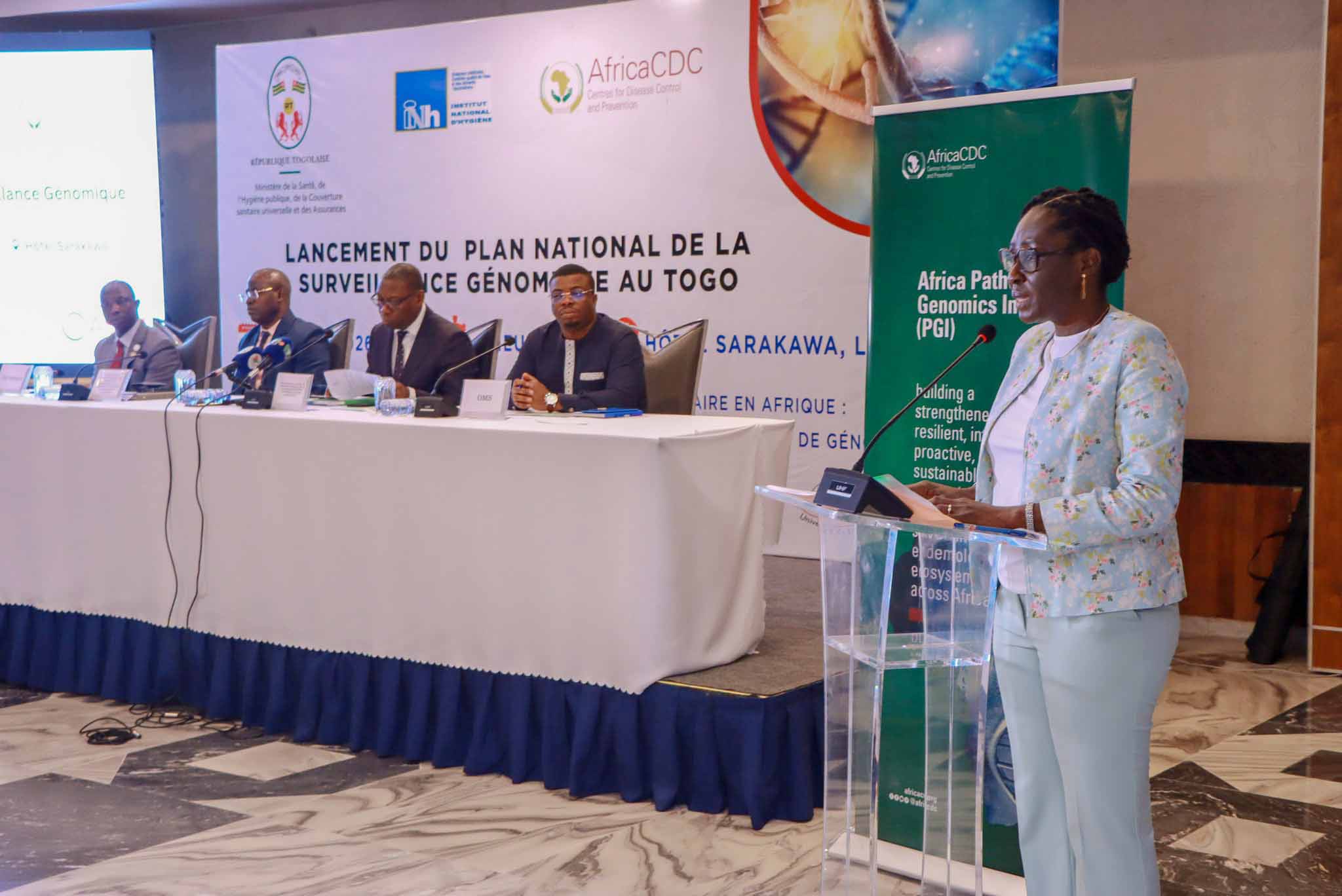
Extract from the article: On Monday 3 August 2026, Lomé hosted the official launch ceremony for the 2026–2028 National Strategic Plan for Genomic Surveillance. Led by the Ministry of Health, Public Hygiene, Universal Health Coverage and Insurance, its implementation repres...
On
Monday 3 August 2026, Lomé hosted the official launch ceremony for the
2026–2028 National Strategic Plan for Genomic Surveillance. Led by the Ministry
of Health, Public Hygiene, Universal Health Coverage and Insurance, its
implementation represents an investment of over 2.8 billion CFA francs and
forms part of the Government’s strategy to develop cutting-edge technologies to
safeguard public health.
Togo
is strengthening its public health defences in the face of a growing number of
global epidemic crises. Stakeholders in the integrated ‘One Health’ approach
have approved and launched an ambitious genomic surveillance plan. With
technical and financial support from the World Health Organisation (WHO) and
Africa CDC, this three-year programme (2026–2028) aims to integrate
cutting-edge biotechnology into the public health system to better track
pathogens.
Technological foresight
The
Secretary-General, representing the Minister of Health, Dr Wotobe Kokou,
explained that recent history of health emergencies necessitates a
technological shift:
“The
COVID-19 pandemic has turned the world upside down; it has strained health
systems, weakened economies and served as a stark reminder that pathogens
recognise neither administrative borders, nor sectoral boundaries, nor
distinctions,” he said.
In
public health, the modern response can no longer be limited to curative
measures. Above all, it has demonstrated that, when faced with an emerging
health threat, the speed of detection, the quality of scientific information
and the ability to anticipate developments are just as crucial as the
therapeutic resources mobilised. “Pathogen genomics has thus established
itself as one of the pillars of contemporary public health security. It enables
the early detection of threats, the monitoring of variant evolution, the
targeting of interventions and the strengthening of the soundness of decisions
taken by health authorities,” added Dr Wotobe Kokou.
A
collaborative and cross-border approach
This
national plan is not limited to human medicine. It brings together more than 80
experts from three interconnected fields: human, animal and environmental
health. The shared objective of the National Institute of Hygiene (INH) and its
partners is to increase the country’s capacity to identify, characterise and
monitor emerging diseases before they spread.
Dr
Kokou Alinon, Regional Director of Africa CDC West Africa, who was present at
the ceremony, emphasised the key elements required for the success of this
roadmap:
“To
successfully implement this strategy, we will need strong political commitment,
appropriate investment at national level, skilled human resources, efficient
laboratories, digital infrastructure and seamless cooperation between sectors
in line with the One Health approach.”
Dr
Alinon also praised the country’s leadership within the sub-region. “I urge
Togo to continue supporting neighbouring countries as they further strengthen
their genomic systems. Infectious diseases know no borders, and our collective
health security depends on each state’s ability to rapidly identify new threats
and respond effectively.”
This
surveillance plan will now draw on national reference laboratories, research
institutes and universities to roll out sequencing capabilities on a large
scale across the country. Through this strategic plan, Togo aims to strengthen
its national capabilities in genomic surveillance and consolidate its
preparedness and response mechanisms for health threats. This represents a
major step forward for national public health security and the implementation
of the ‘One Health’ approach in Togo.
Merveille
MESSAN